#1
We walked to the middle field, just north of the barn. Our first day in the field, two weeks beyond our start date. Eight rows of kale stalks, dead; no longer full of rich, deep green leaves indicating life. Instead, three feet tall brown stalks, stripped of leaves, remnants of last season. Kale is a late season crop, able to be harvested even beyond the first frosts of winter, up til the ground freezes. For this reason the stalks are left in til spring, when hypothetically they are easier to pull. They need to be removed because they are so fibrous and if tilled into the soil, they get in the way during planting. It was time.
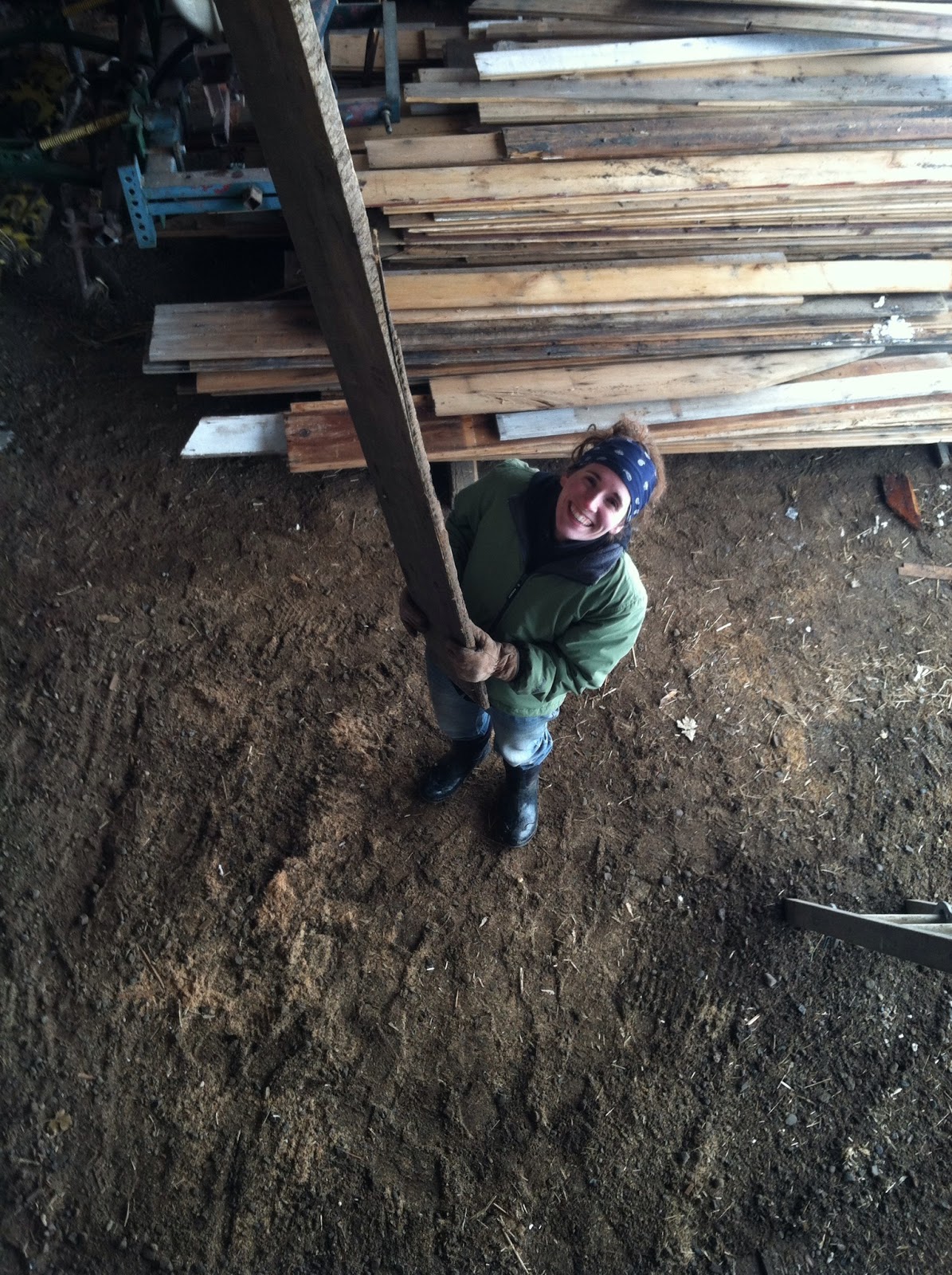
Dan demonstrated pulling a stalk, it did not give up without a fight. I attempted, my first stalk came right up, the second not so much. Dan grabbed his secret weapon, the branch cutter. The trick is to get as far down on the stalk as possible, a bit below the soil line. One hand on each handle, force them together until the stalk snaps. After ten stalks were laying on the ground, Dan left us to finish the whole field.
Ben and I switched between chopping stalks and throwing them into the trailer behind the G (the converted electric Allis-Chalmers cultivating tractor). Chopping involved squatting and bending and using biceps. Picking up involved bending and using forearm muscles and getting wet hands. Either way, we were working our bodies.
The air was crisp, with snow still on the ground, there was a slight chill rising. The sky was blue, the sun peering through the fairy tale like clouds. The birds singing and chirping in the trees at the edge of the field. A pair of sand hill cranes squall as they fly right above us. The distinct aroma of robust earthiness lingering from the kale. In the distance, a constant hum we assumed was a mega tractor in nearby field. We started discussing the joys of the work we were doing. Our bodies being used, our presence with the land, our experiences of nature, our lungs receiving fresh air, our ability to converse as we work together. In that moment, we did not envy those conventional farmers around us stuck inside large equipment, 12 feet above the ground, removed from all that creation has to offer.
After the field was free of stalks, we threw them over the fence to the draft horses (Molly, Jane, and Benedict). A special mid-afternoon treat. The field is ready to be tilled in preparation for new life to be planted.


#2
One of the three days above fifty in April was spent skinning (putting poly on) the high tunnels. These are those white crescent shaped structures you see on most vegetable farms, also known as hoop houses. The metal bows are left in the ground season after season, but the poly is removed in the fall and put back on in the spring. The purpose of a high tunnel is to create an ideal growing environment for plants. It extends the growing season by warming up the ground sooner than that exposed to all the elements of spring. Tomatoes and basil and eggplant and cucumbers are planted directly into the soil and fostered to grow to their greatest potential.
The wind was blowing at 5 mph, barely strong enough to move branches, practically considered a still day. Get a 26x200 foot tarp stretched out and it seems like a wind storm is erupting. It takes all five of us working together to keep it from blowing away. We begin with the north tunnel on the west side. The poly is wrapped around the end bows and clipped. With the plastic on the outside, we pull it up and assist it over the arch to the other side and continue 200 feet to the east end, fighting the wind the entire time. After the poly is in place, we begin at the west end, two people per side, throwing a rope over, wrapping it around hooks at the base of the poles, tightening, throwing it back, and repeating. When one rope is done, we begin another, crisscrossing it over the one we just finished.
Not just one tunnel, we skinned two before lunch. Ben and I continued the project in the afternoon by stretching and clipping the ends and hanging the doors. Typically this is a couple day project. This year, a single day.


#3
May 2. Two days prior was 65 degrees. That morning we woke to two inches of snow. It was chilly. We thought we were in the clear and could pack away our heavier winter clothing. Good thing we did not act on that thought. Layer upon layer, hats, insulated gloves, wool socks.
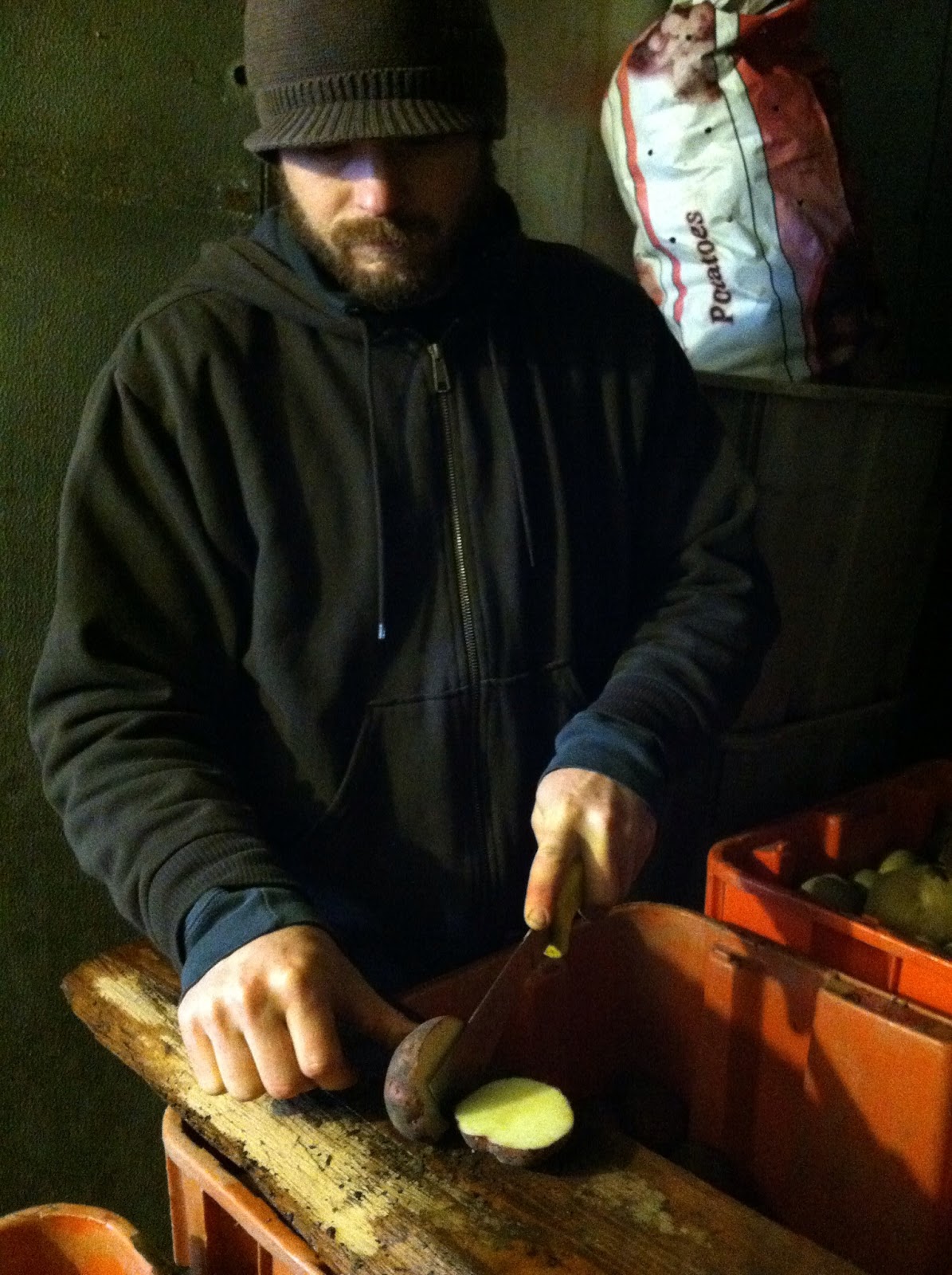
A week ago Dan picked up the seed potatoes. They were sorted into separate baskets based on variety and stacked in the pack shed breezeway. The day prior, Ben put them in the unplugged walk-in cooler to protect them from the extreme cold. Rather than pulling them out and working in the cutting wind, we set up in the cooler. It felt like a quasi-lit cave, a little damp and the all familiar dirt fragrance from potatoes.
There were 6 piles of baskets, stacked 4 high and many fifty pound sacks full of potatoes waiting to be sorted and cut. A seed potato has to be smaller than a racquetball in order to fit through the slit on the planter implement. Some were small enough, we threw those in one basket, others were too large, we cut those in half, thirds or even quarters. We will let them set, exposed to air for a week before we plant them, allowing the potato to cure. This is an attempt to avoid bacteria attacking the freshly cut potato flesh.
Approximately one thousand pounds of potatoes sorted and cut. We walked out into the brisk fresh air, the heavy snow clouds had lifted a bit. The day was starting to brighten just as it was coming to an end. The stark difference of weather in just twelve hours is astonishing, I guess we should not be so shocked, this is the Midwest.